TEKS 3.4K · Grade 3
Solving one- and two-step multiplication and division problems
Working out which operation a word problem is asking for, and why.
The standard itself reads: “3.4K: solve one-step and two-step problems involving multiplication and division within 100 using strategies based on objects; pictorial models, including arrays, area models, and equal groups; properties of operations; or recall of facts”
One of them, worked all the way through
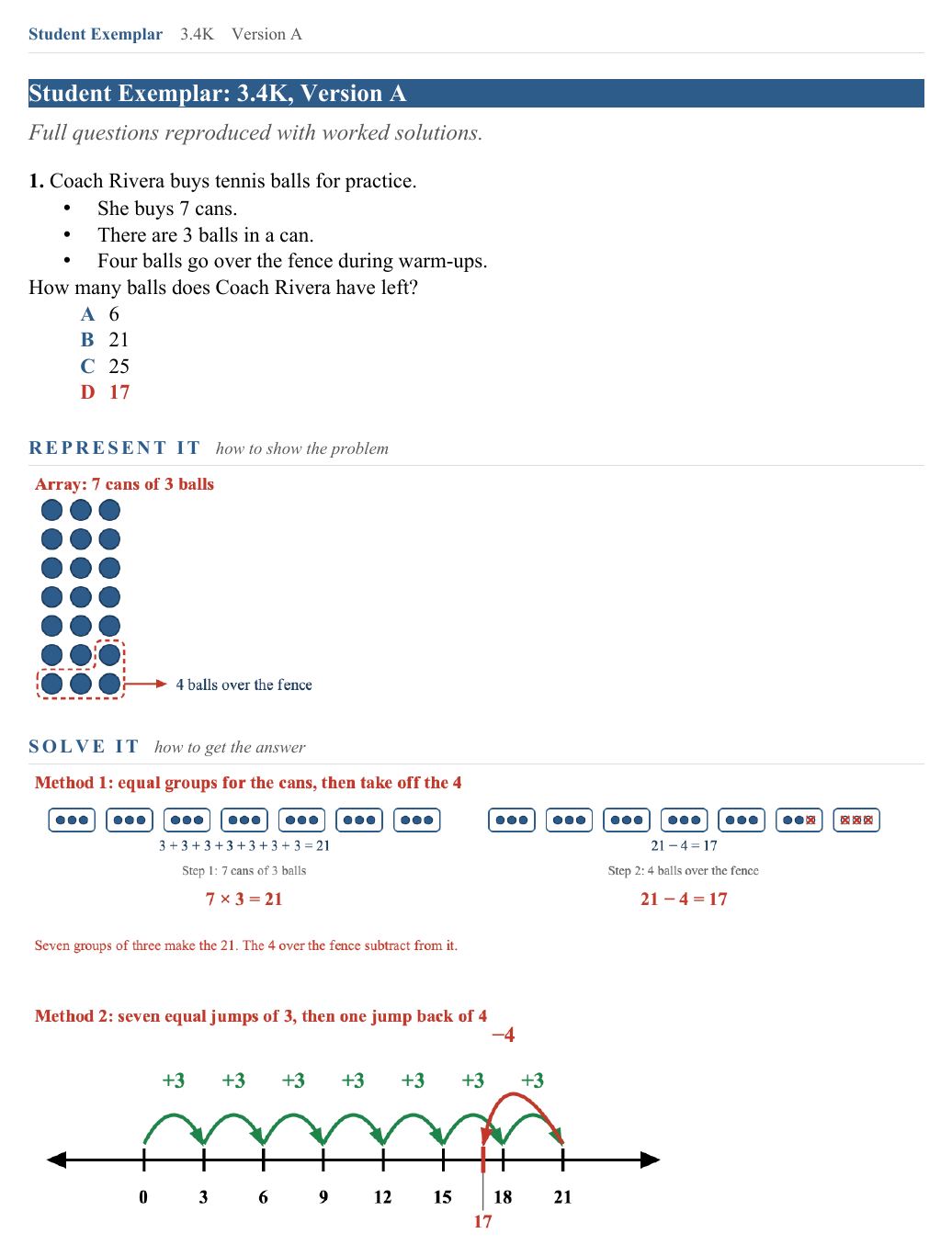
- Seven cans of three is seven equal groups, so multiply: 7 x 3 = 21.
- Giving four away takes them off: 21 − 4 = 17.
- Two steps, and the order matters.
This is one way, not the only way. The printable shows the same question worked more than one way, because children get there differently.
What usually goes wrong, and what helps
Each of these is a different misunderstanding rather than a slip, so each one needs something different. Find the one that sounds like your kid.
- The student multiplies whenever two numbers appear, without asking whether the groups are equal
- Ask whether the groups are all the same size. Multiplying only works when they are.
- The student answers the first step of a two-step problem and stops there
- Getting the first number right is half of a two-step problem, not the end of it. Have them read the question again once they have it.
- The student shares the total once, then multiplies, when the second step shares again
- Say both steps out loud before any arithmetic: the notebooks are split among the groups, then that pile is split among the tables. Both steps share.
Try this at home
Before any arithmetic, ask: are we putting equal groups together, or breaking one group up? That single question sorts almost every problem at this level.
where these methods come from The strategies behind it: the Multiplication chart and the Division chart.
What’s in the printable
Four questions on this skill, two to a page. The rest of the file is for the adult: an answer key, a worked solution for every question, and teacher pages on what each wrong answer means.