TEKS 3.5B · Grade 3
Multiplication and division word problems
Representing a problem with a picture or an equation before solving it, using the strip diagram Texas classrooms use.
The standard itself reads: “3.5B: represent and solve one- and two-step multiplication and division problems within 100 using arrays, strip diagrams, and equations”
One of them, worked all the way through
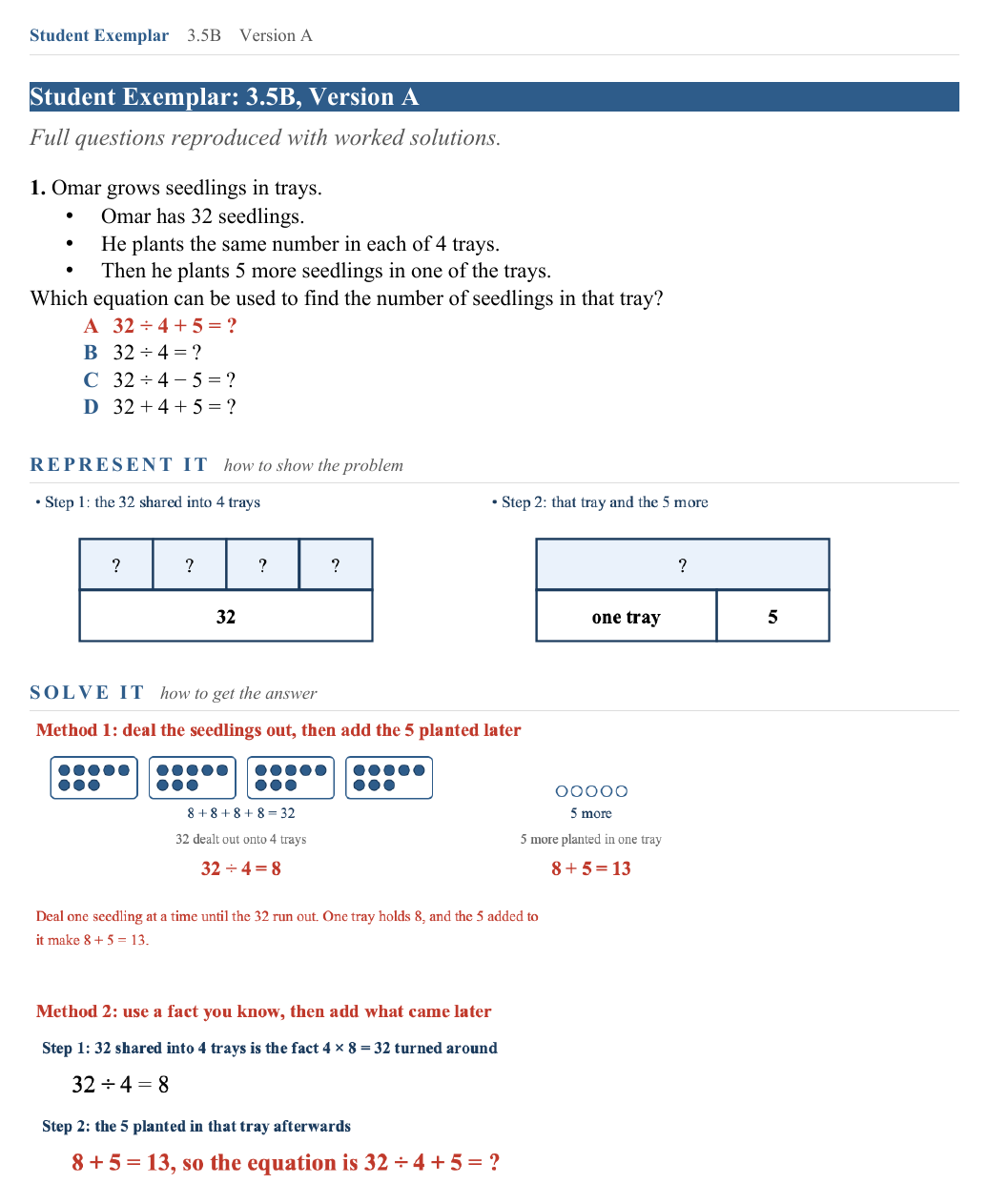
- Picture it first. Thirty-two seedlings shared equally among 4 trays is 4 equal groups, so one tray holds 32 ÷ 4.
- Then 5 more go into that tray, which adds to it: + 5.
- Write the steps in the order they happen: 32 ÷ 4 + 5. The drawing and the equation are saying the same thing.
This is one way, not the only way. The printable shows the same question worked more than one way, because children get there differently.
What usually goes wrong, and what helps
Each of these is a different misunderstanding rather than a slip, so each one needs something different. Find the one that sounds like your kid.
- The student picks the operation from the numbers in the story rather than from what is happening to them
- Ask what is happening to the numbers: are equal groups being put together, or is one group being shared out? The operation follows the action, not the order the numbers turn up in.
- The student does the first step and stops, leaving the second one out of the equation
- Read the story back one sentence at a time, asking whether the equation has that part in it yet. Two things happen here, so two have to show up.
- The student uses the total as one of the parts
- Ask “which number is everything altogether?” That one goes outside the parts, never inside them.
Try this at home
Have them draw the problem before they write any numbers. If the drawing is right the arithmetic usually follows; if they cannot draw it, the trouble is in the reading, not the math.
where these methods come from The strategies behind it: the Multiplication chart and the Division chart.
What’s in the printable
Four questions on this skill, two to a page. The rest of the file is for the adult: an answer key, a worked solution for every question, and teacher pages on what each wrong answer means.